Festivals
/
Navy Pier, Chicago
/
Chicago Live Festival moved indoors as rain covered Navy Pier, where five stages, more than 100 artists and a commanding Common finale turned bad weather into a test the festival passed.

Rain followed Chicago Live Festival through Saturday, softening the skyline, darkening the lakefront and forcing a festival designed around movement to reconsider where that movement could happen. The answer was already built into Navy Pier. Instead of shrinking, the event moved inward.
Inside, the Pier felt less like one attraction than a chain of large performance venues joined by a single corridor. A dance program could command the scale of Festival Hall B. Drag artists and musicians worked beneath the steel and glass canopy of Crystal Gardens. Bands settled into Lakeview Terrace. At the far end, the Aon Grand Ballroom became a full concert hall for Common.
That adaptability mattered. Chicago Live Festival returned September 19 and 20 for its sixth year, bringing more than 100 artists and organizations to five stages. Its familiar promise is the festival's range of music, dance, theater, comedy, drag, spoken word and multidisciplinary work. This year, the weather revealed something else: Navy Pier could protect that range without making the weekend feel like a diminished version of an outdoor plan.


Crystal Gardens made the strongest first argument. The vast atrium held onto the afternoon's natural light even as the weather turned gray outside. Its high glass ceiling gave performances air, while the wheel and the lakefront remained visible through the structure. It was not a substitute room. It had an atmosphere that an ordinary black box venue could not reproduce.
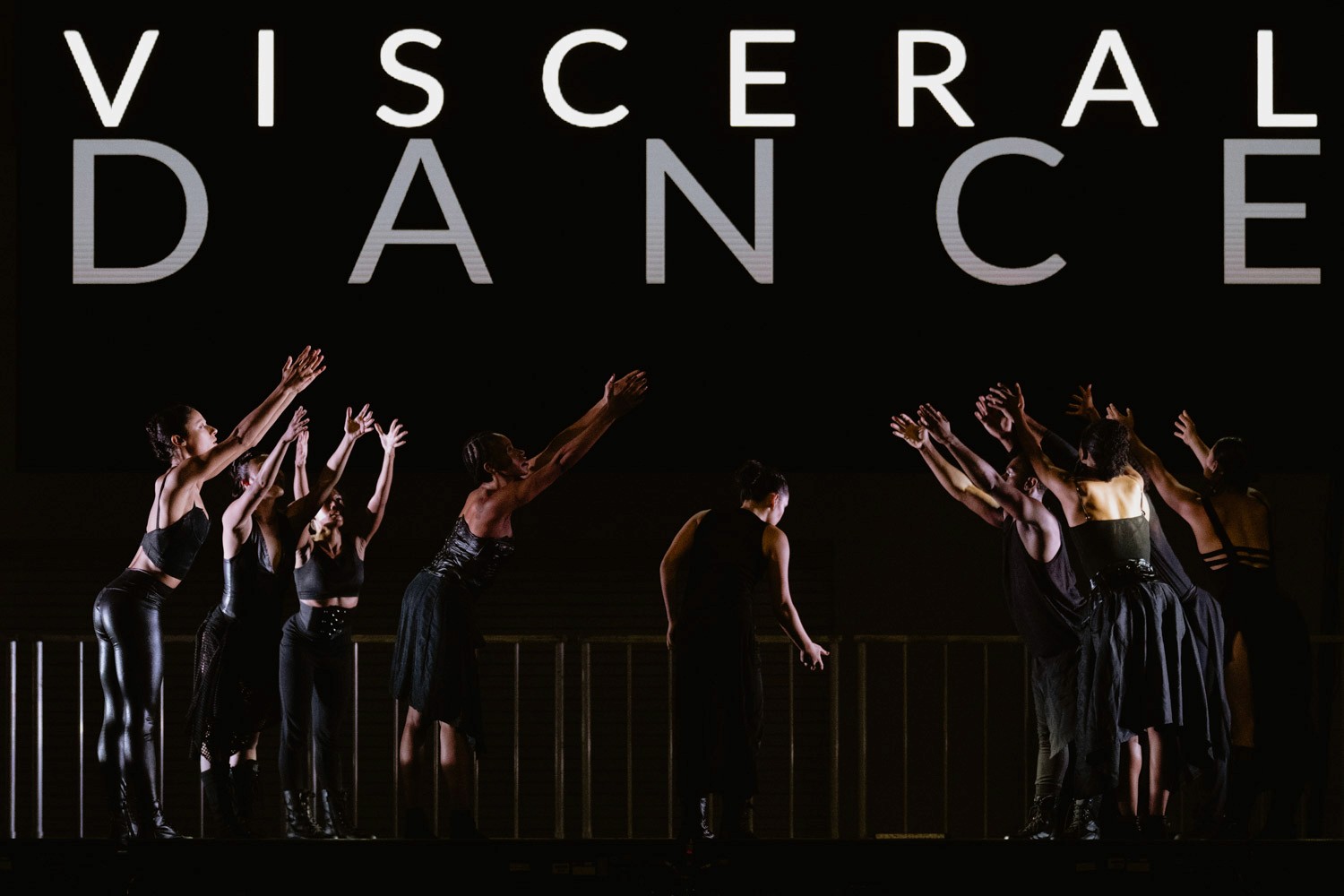
Festival Hall B offered a different advantage. Its floor, stage depth and theatrical lighting let dance companies arrive at full scale. A festival sampler can make ballet and contemporary dance feel compressed; here, the bodies still had room to travel, pause and build images. Visceral Dance Chicago's ensemble work registered across the hall rather than disappearing into a temporary stage.
Lakeview Terrace was more modest than the Pier's largest rooms, but it still provided a credible home for longer band sets. The Aon Grand Ballroom, meanwhile, was the decisive space. Its size, production infrastructure and distance from the Pier's entrance allowed the night to build toward a genuine headlining concert rather than a ceremonial closing appearance.
The supporting infrastructure mattered too. Visitors could move between stages without repeatedly stepping back into the rain. Restrooms, food counters, restaurants and parking were connected to the same indoor route. Those details are rarely the romance of a festival, but on a wet weekend they became part of the artistic experience: people could stay, recover, eat and try another room instead of deciding the weather had ended the day.

Chicago Live Festival is presented by The Pritzker Foundation with generous support from Ferrara Candy Company. Free admission is central to the event's civic purpose. It allows a family heading toward the Centennial Wheel, a devoted dance audience and someone arriving for one specific headliner to occupy the same building and encounter work they did not plan to see.
That collision is the festival's real form. In Crystal Gardens, Denali and Brooke Lynn Hytes brought drag performance into a room whose scale usually belongs to civic architecture. Nearby, singers, bands and community ensembles changed the sound of the atrium from one short set to the next. In Festival Hall B, dance moved from sharp contemporary lines to more theatrical vocabularies. The point was not to flatten those differences into a generic celebration of diversity. It was to let each form keep its identity while sharing the same public platform.
The weekend also showed how broad Chicago's definition of a major cultural lineup can be. Established institutions appeared beside independent ensembles, queer performers, youth groups and artists working across international traditions. Nearly one third of the 2026 lineup was making its Chicago Live Festival debut, according to Navy Pier. That balance matters: recognizable names bring attention, but discovery gives the festival a reason to exist beyond its headliner.
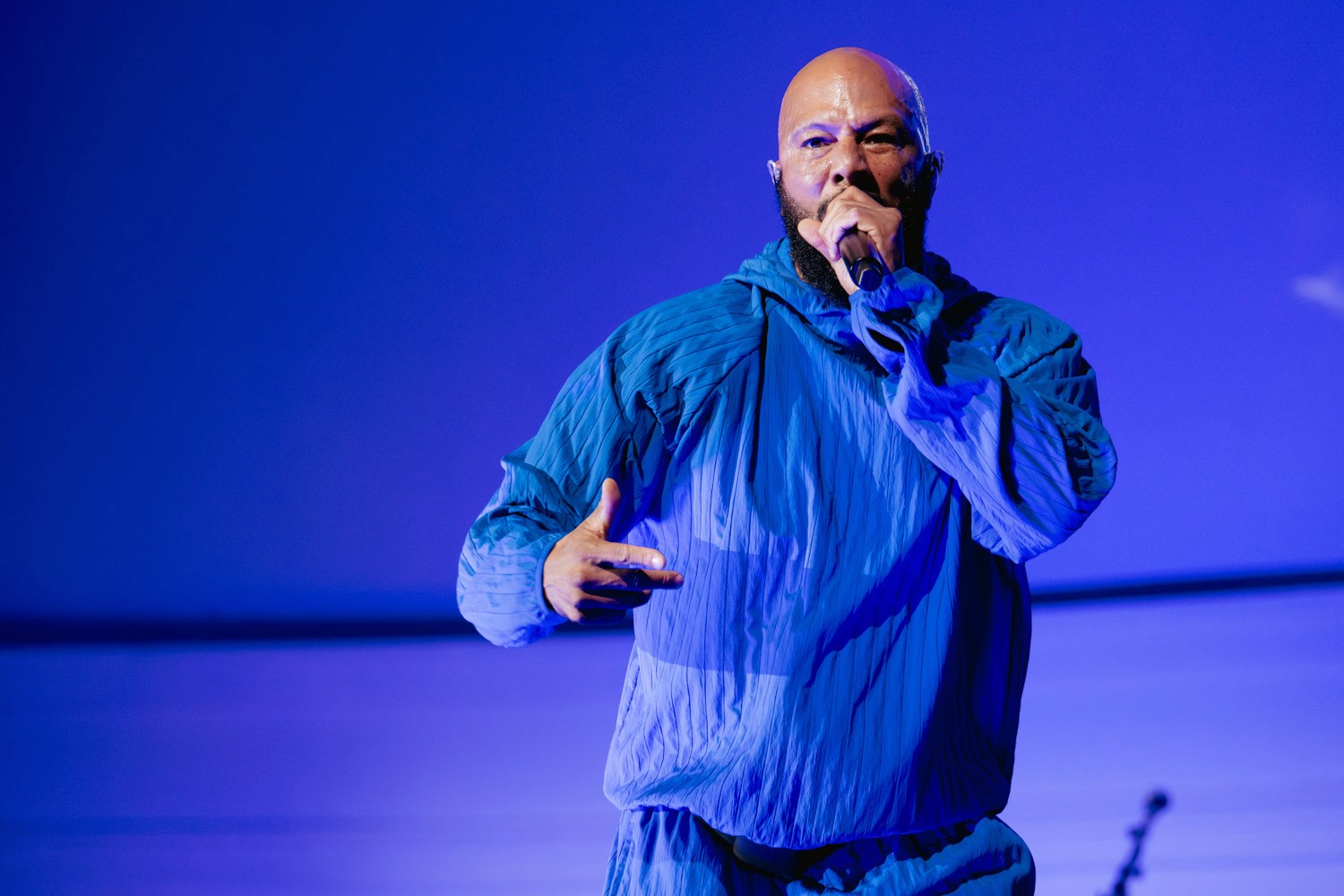
The photographs in this article follow only part of that range. They were made on Saturday, and they do not pretend to account for every room or performance. What they do show is the speed with which the Pier could change character: daylight in Crystal Gardens, concentrated stage light in Festival Hall B, brick and shadow at Lakeview Terrace, then a ballroom washed in blue.


Common's 9 p.m. appearance changed the scale of the day. Until then, Chicago Live Festival had operated as a festival of overlapping choices. The ballroom turned it into a shared destination.
The production was built like a major concert: a wide stage, a towering video image, tightly coordinated lighting and a live setup that filled the Aon Grand Ballroom without losing the directness of a rapper addressing his hometown. Common understood how to use that size. He could work the full room, then narrow the exchange to a single person near the barricade. He pointed, listened, brought voices forward and repeatedly returned energy to the crowd rather than leaving it as a one way performance.
That ability to lead a room was the night's defining force. Arms rose together, phones lit the dark, and the audience answered cues with the speed of people who already understood the language. Yet the intensity never became hostile. People made room for one another, responded to the stage and maintained their own order. For a night built from so many communities and artistic traditions, the final set did not erase the differences. It gave them a common pulse.
Common's presence also completed the festival's local argument. A Chicago artist with an international career stood at the center of the Pier, but the route to that moment had passed through dancers, theater artists, drag performers, youth ensembles and neighborhood musicians. The headliner was the summit, not the whole mountain.

Chicago Live Report's on site reporting and photographs for this article come from Saturday. Sunday's program is described from the festival's published schedule and participating organizations' information.
The second day continued the same breadth while creating clearer paths through individual disciplines. Festival Hall B held a concentrated dance sequence that included Ballet 5:8, The Joffrey Ballet, Hedwig Dances, South Chicago Dance Theatre, The Seldoms, Deeply Rooted Dance Theater, Cerqua Rivera Dance Theatre and Momenta Dance Company. Chicago Philharmonic joined In the Realm of Senses for a multidisciplinary performance combining music, dance and projected visual work.
The Aon Grand Ballroom became a jazz route, moving through the Jazz Institute of Chicago, Angel Bat Dawid, Nico Segal, Dee Alexander Quartet and Victor Garcia, among others. Crystal Gardens carried family and international performance, including the Korean Performing Arts Institute of Chicago, Muntu Dance Theatre and Natya Dance Theatre. At Lakeview Terrace, Liquid Soul led into Dancing Queen: An ABBA Salute for the final block.
Sunday also expanded the festival's accessibility work through DisFest. Published resources included ASL interpretation at three stages, CART captioning in the ballroom, live audio description for East Stage performances and a welcome station for guests seeking access information. In an event organized around cultural access, those services were not a side program. They helped define what “free and open” could mean in practice.
When Common's set ended Saturday, the audience poured back toward the lake just as the fireworks began. Fog had settled over the skyline. Some bursts disappeared almost completely into the low cloud; others opened briefly above the buildings, their light diffused into a white glow.
It was not the clean, postcard view Navy Pier fireworks usually promise. It was better suited to this particular night: partial, weather beaten and still communal. People stopped under the mist, looked up and took what the sky allowed.
Chicago Live Festival succeeded for the same reason. It did not defeat the rain. It adapted faster than the weather could reduce it. The Pier's enormous indoor rooms gave the artists more than shelter, and the performances gave those rooms a different identity for a weekend. By the time the final light faded into the fog, Navy Pier had done what the festival asks of Chicago itself: make space for distinct voices, keep them close enough to meet, and trust that an audience can become a city for a few hours.
