Music
/
/
Dawn Richard’s Saturday-night set at Northalsted Market Days stood out for its precision — a tightly coordinated mix of choreography, lighting, movement and sound that reflected the larger artistic world she has spent years building beyond conventional pop and R&B.

Dawn Richard’s performance at Northalsted Market Days felt unusually complete.
The choreography, dancers, lighting, movement and sound all appeared to be working toward the same idea. Nothing felt casually placed around the songs. Richard moved through the stage with the confidence of someone who understood not only how the music should sound, but how the entire performance should look and move.
For an outdoor street festival, the level of polish was striking.
It did not feel oversized or theatrical for the sake of being theatrical. It felt controlled, refined and intentional — closer to a touring production compressed into a festival stage than a conventional artist appearance.
That impression makes more sense when placed against Richard’s career.
Richard first became widely known through MTV’s Making the Band 3 and Danity Kane, one of the most successful pop and R&B girl groups of the 2000s. She later joined Diddy–Dirty Money, continuing her career inside a major-label system built around large-scale pop production.
But her solo work moved steadily away from those boundaries.
Across albums including Goldenheart, Blackheart, Redemption, New Breed and Second Line: An Electro Revival, Richard developed a sound that pulled from R&B, electronic music, house, experimental pop and dance music without settling comfortably into any one category.
That independence became one of the defining qualities of her career.
Rather than treating electronic music or experimental production as side projects, Richard built her identity around the freedom to move between them. Her work increasingly became less about fitting into an established genre and more about creating a world with its own visual and musical language.

Richard grew up in New Orleans, and the city has become increasingly important to her solo work.
Her father, Frank Richard, sang with the funk and soul group Chocolate Milk, while her mother was a dancer. Music and movement were already part of the environment she came from.
But Richard’s use of New Orleans culture rarely feels nostalgic.
Instead of simply recreating familiar regional sounds, she has drawn from bounce, second-line traditions, Black dance music and Creole identity while placing them inside electronic and futuristic production.
That approach was especially visible on New Breed and Second Line: An Electro Revival, albums that connected New Orleans history with a forward-looking sound rather than treating the city as something fixed in the past.
Her next album, Creole Culture, continues that direction. Announced only days before her Market Days appearance, the project is scheduled for release in October 2026 and completes a trilogy that began with New Breed and continued with Second Line.
For Richard, New Orleans is not simply a hometown reference. It is part of the foundation of the artistic world she keeps expanding.
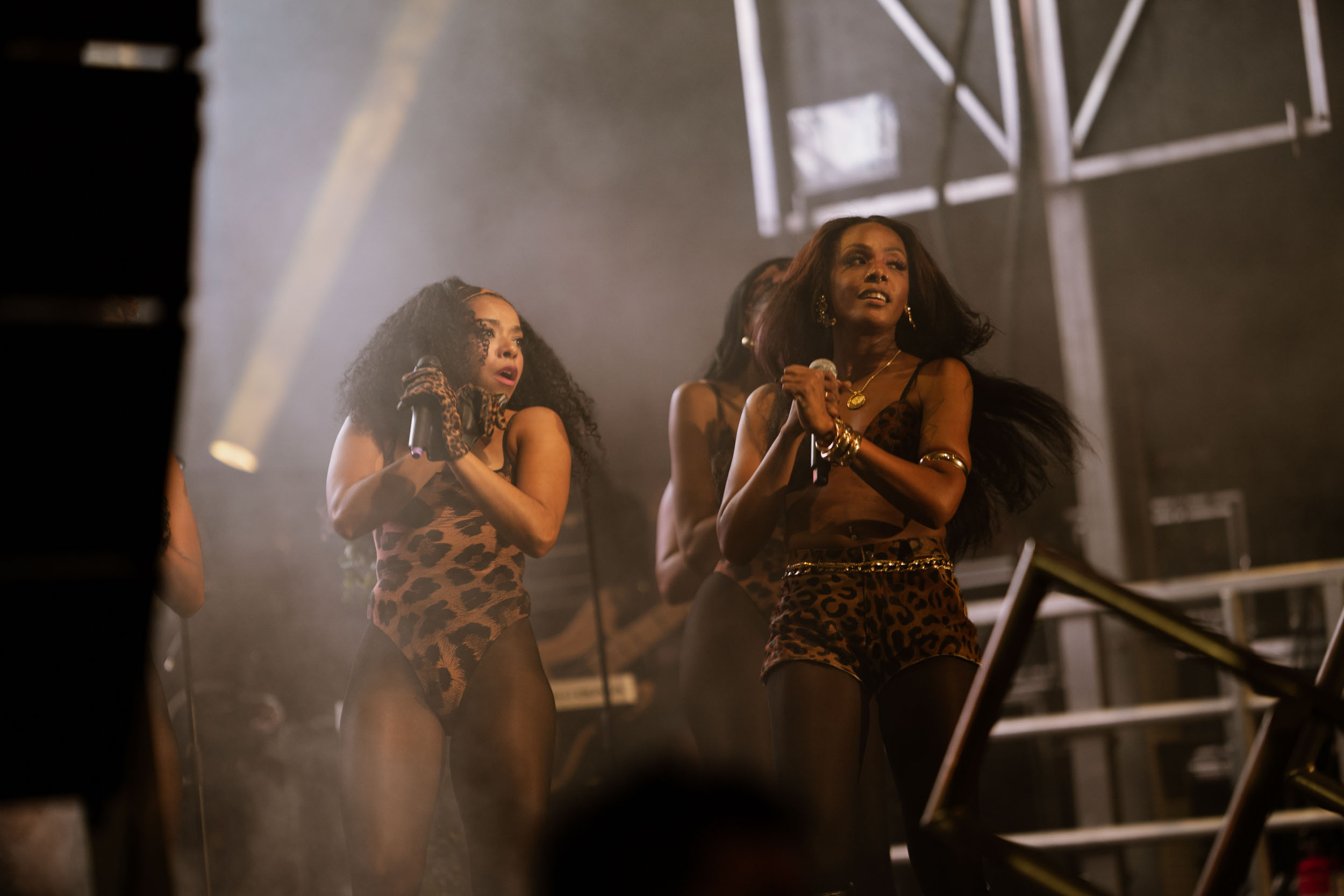
That background also helps explain why movement played such a large role in the Market Days performance.
Richard has always worked closely with dance, and onstage the choreography did not function as decoration behind the music. The dancers, Richard’s own movement, the lighting and the arrangement of bodies across the stage continually changed how the songs were experienced.
At times, the stage seemed to operate almost like a visual composition in motion.
That made the performance feel more deliberate than a standard festival set. Even when the production was energetic, there was a sense of control underneath it.
The show was clearly designed to be watched as much as heard.

Richard’s appearance at Market Days also fits a relationship with LGBTQ+ audiences that stretches back much further than one festival booking.
She has publicly described herself as an LGBTQIA+ ally and has spoken about the importance of queer fans to her career, including during the Danity Kane years.
That connection also overlaps with her New Orleans influences.
Bounce music, which has appeared repeatedly in Richard’s work, has deep roots in the city’s Black queer community. Richard has spoken about the importance of recognizing the LGBTQ+ artists and communities whose ideas, language and aesthetics have often been absorbed into mainstream culture without the same level of credit.
In that context, a Market Days appearance does not feel disconnected from the rest of her career. It fits naturally within the audiences and musical traditions she has already acknowledged for years.
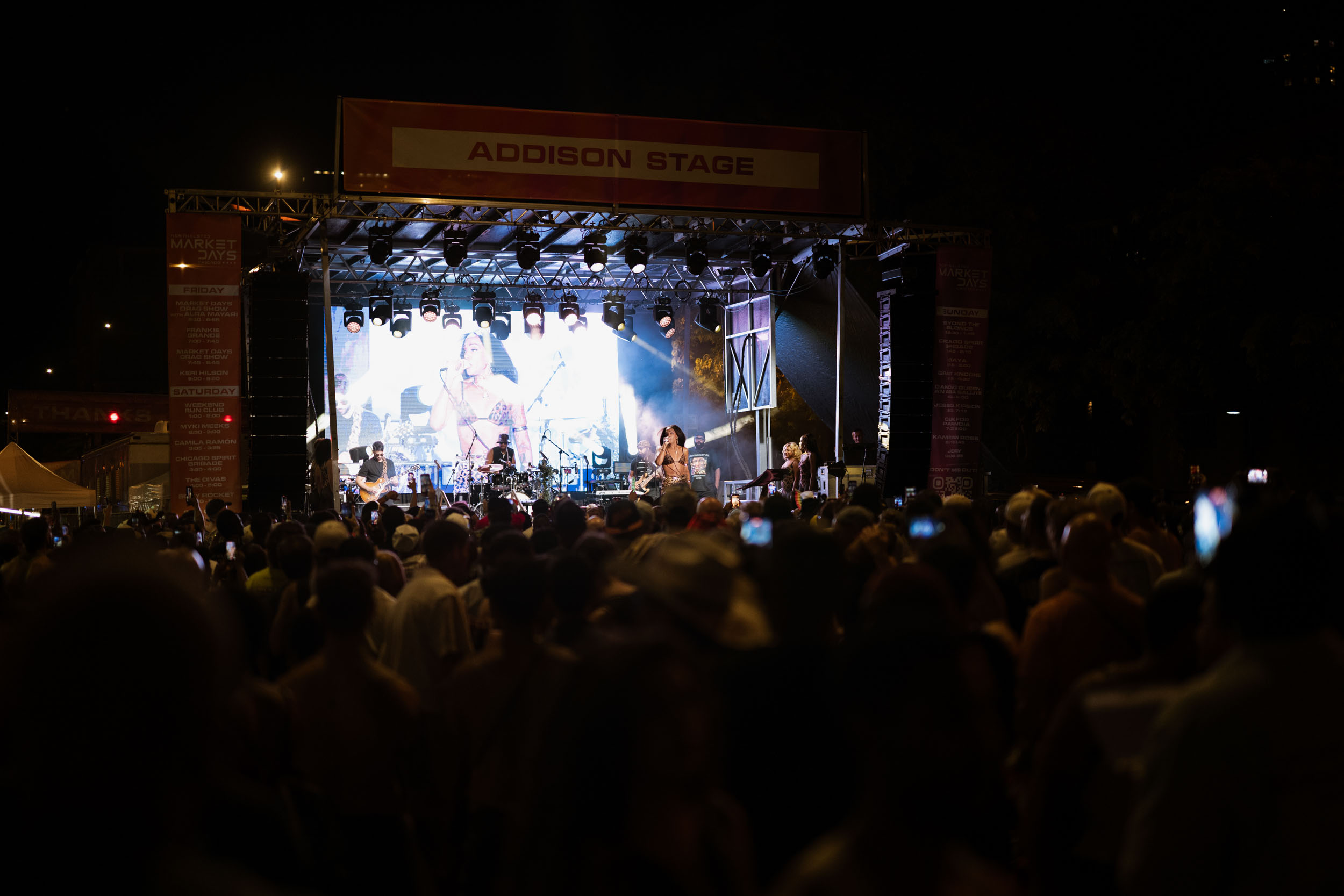
None of this background was necessary to appreciate what happened onstage.
But it helps explain why the performance felt so finished.
The choreography, electronic sound, dancers, lighting and constant attention to movement were not separate production elements layered onto the songs. They were all part of the same artistic language.
Richard entered the music industry through a highly structured commercial pop system. Over time, she took that experience and moved in a much more personal direction, building a career where sound, movement, identity and visual design could exist together without needing to fit neatly inside one category.
At Market Days, that evolution was easy to see.
For the length of the set, the Addison Stage became something more than a festival platform. It became a carefully constructed space — polished, physical and unmistakably her own.