Festivals
/
Lakeview, Chicago
/
Lakeview Taco Fest brought a packed weekend of tacos, live music, wrestling, and neighborhood energy to Southport Avenue, turning the street into one of Lakeview’s liveliest late-summer gatherings.

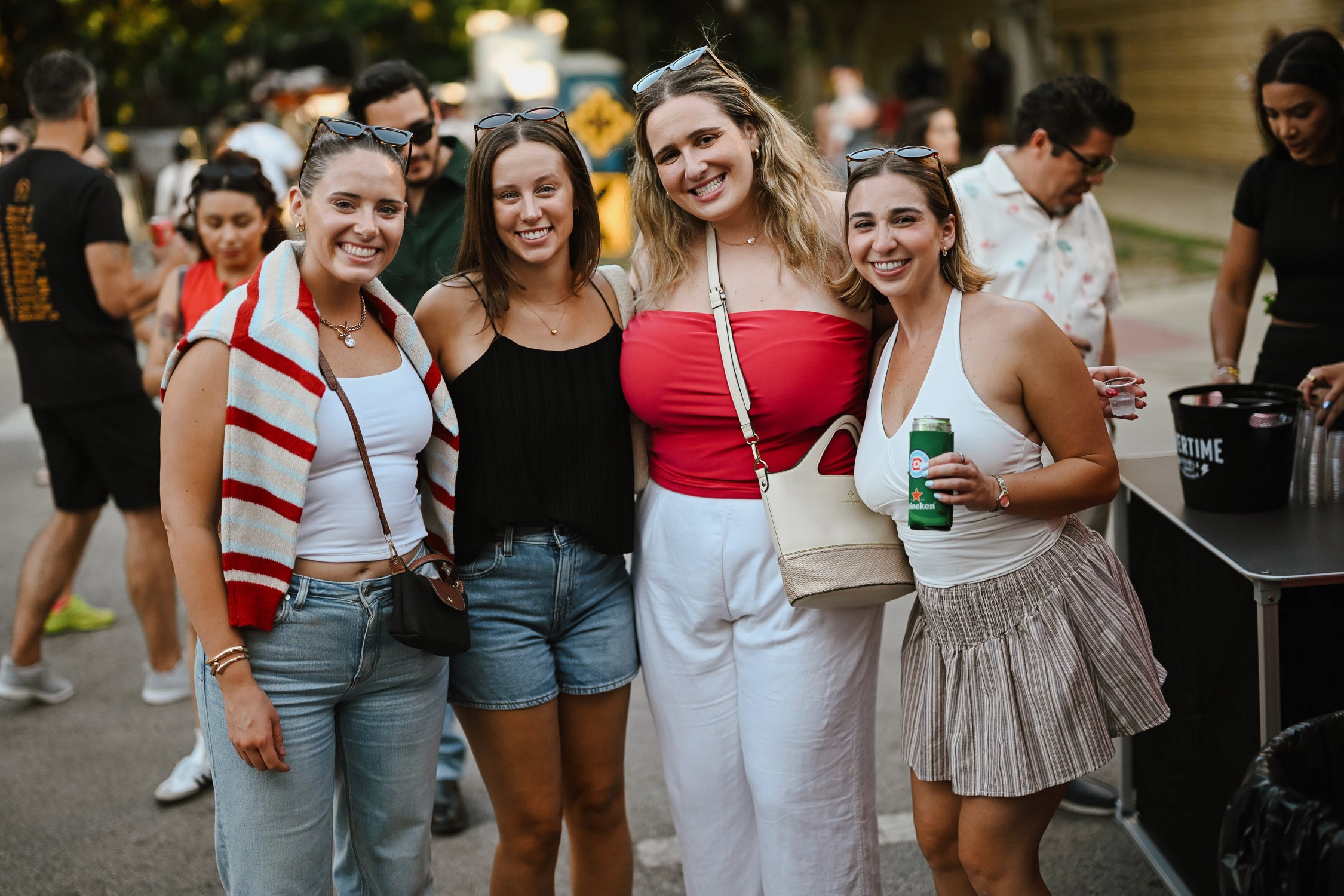
For three days in August, Southport Avenue became one of Chicago’s busiest neighborhood gathering places as the 13th annual Lakeview Taco Fest returned to the stretch between Addison and Roscoe. Tacos were the obvious centerpiece, but the festival worked because it offered much more than food. Two stages of live music, lucha libre wrestling, family activities and a steady flow of people moving through the Southport Corridor gave the weekend the feel of a complete neighborhood festival rather than a single-theme food event.
More Than the Usual Festival Food
Food is part of nearly every Chicago street festival, but at Taco Fest it genuinely felt like a reason to be there.
More than ten participating restaurants and food vendors served tacos across a wide range of styles, from familiar steak, chicken and chorizo to less traditional interpretations. The quality and variety made a noticeable difference. Rather than functioning simply as something to grab between performances, the food remained one of the main attractions throughout the weekend.
That matters for a festival built around a single food category. Taco Fest managed to keep the concept focused without making it feel repetitive. Groups could sample from several vendors, stop for music, watch wrestling and then return to the food again. It gave the event a natural rhythm that encouraged people to stay rather than simply walk through.
Southport Avenue Was the Right Setting
The location played a larger role than it might seem.
Southport Corridor is already one of Lakeview’s most active pedestrian-oriented commercial districts, lined with restaurants, neighborhood businesses and shops. Closing the street for a weekend therefore felt less like creating a temporary festival ground and more like expanding something that was already there.
Restaurants and storefronts remained part of the visual character of the event, while the relatively compact stretch between Addison and Roscoe kept the two music stages, food vendors and other attractions within an easy walk.
That scale worked particularly well for families. There was enough happening to spend several hours at the festival, but not so much distance between attractions that moving from one part of the event to another became a project of its own.

A Festival Families Could Actually Share
The family-friendly element was not limited to a kids’ area tucked into one corner.
Children and adults were mixed throughout the festival, whether they were watching the bands, eating along Southport or gathering around the lucha libre ring at Cornelia. Mexican-style wrestling was one of the weekend’s most distinctive attractions, drawing crowds that often included as many kids as adults.
One of the clearest examples came on the North Stage during Love in October. What began as a band performance became a family affair, with the musicians’ children joining the moment and other members of the family becoming part of the show.
It was a small scene, but one that captured the larger atmosphere of Taco Fest particularly well. The event never felt divided into separate programming for adults and children. Much of it could simply be enjoyed together.


A Music Lineup Built Across Generations
The live music program followed much the same philosophy.
Instead of concentrating on one genre, the two stages offered a broad mix of Chicago festival favorites, tribute acts, younger performers and Latin music throughout the weekend.
High-energy acts such as Run Forrest Run sat comfortably alongside well-known local street-festival bands including Maggie Speaks, 16 Candles and Rod Tuffcurls & The Bench Press. Tribute performances brought the music of artists such as Red Hot Chili Peppers, U2, Foo Fighters, Fleetwood Mac and Pearl Jam into the lineup, giving audiences several different generations of familiar material.
At the other end of the spectrum, UpBeat Music & Arts Academy and School of Rock gave young musicians their own place on the schedule. Mariachi Los Palmeros and Chicago Latin Groove added another musical dimension that fit naturally alongside the food and lucha libre already central to the weekend.
The result was not a lineup designed for one narrowly defined audience. Parents could recognize songs they had known for decades, younger crowds could find their own energy, and families could move between performances without the festival suddenly feeling like a completely different event from one stage to the next.


Music That Supported the Festival Instead of Overwhelming It
Taco Fest is not primarily marketed as a music festival, and that may actually be one of the strengths of its programming.
The two stages were substantial enough that live music was never an afterthought. There was almost always a worthwhile performance to find, and several of the acts would have been strong draws at any Chicago neighborhood festival.
At the same time, the stages did not dominate everything around them. Food remained important. Families continued circulating. Crowds formed around lucha libre and other activities. Music gave the festival energy without forcing every visitor to experience the weekend in exactly the same way.
That balance can be difficult to achieve. Some street festivals feel like concerts with food vendors attached; others offer music primarily as background entertainment. Lakeview Taco Fest landed somewhere more useful in between.


Latin Flavor Within a Very Chicago Festival
Tacos naturally provided the foundation, while mariachi, Latin music and lucha libre brought additional elements of Mexican and Latin culture into the weekend.
But the festival did not feel like it was trying to present itself as a formal cultural showcase. Those elements instead mixed with tribute rock bands, Chicago cover-band favorites, neighborhood restaurants and families spending a summer afternoon on Southport.
In that sense, Taco Fest felt distinctly Chicago.
Different styles, generations and traditions occupied the same few blocks without needing to be separated into individual experiences. A family could watch young musicians perform, eat tacos from a local restaurant, see lucha libre in the street and finish the evening in front of a Pearl Jam or U2 tribute band.
The variety was part of the identity rather than a distraction from it.

One of the More Complete Neighborhood Festivals of the Summer
Chicago has no shortage of summer street festivals, and many share the same basic ingredients: food, drinks, vendors and live music.
What distinguished Lakeview Taco Fest was how well those pieces worked together.
The food was strong enough to justify the festival’s name. The music lineup had enough range and quality to stand on its own. Lucha libre gave the weekend something visually and culturally distinctive, while the family programming and compact Southport setting made the event accessible to a much broader crowd.
None of those elements needed to carry the entire festival.
Together, they created a weekend that felt lively without becoming one-dimensional and family-friendly without losing the energy expected from a Chicago summer street fest.
Lakeview Taco Fest may begin with tacos, but by the end of the weekend, the food was only one part of why Southport Avenue worked so well.