Festivals
/
/
Wicker Park Fest returned to Milwaukee Avenue with original music, touring artists, vintage fashion and a street full of local character—turning three summer days into a vivid reflection of the neighborhood itself.

For three days in July, Milwaukee Avenue became a concentrated version of the neighborhood around it.
Wicker Park Fest returned July 24 through 26 for its 22nd year, bringing more than 50 musical acts alongside local businesses, food, art, fashion and community programming. The festival stretched through one of Chicago’s most recognizable commercial districts, but what stood out most was not simply the amount happening on the street. It was how clearly the event carried the personality of Wicker Park itself.

A Music Lineup With Its Own Point of View
Music sits unusually close to the center of Wicker Park Fest.
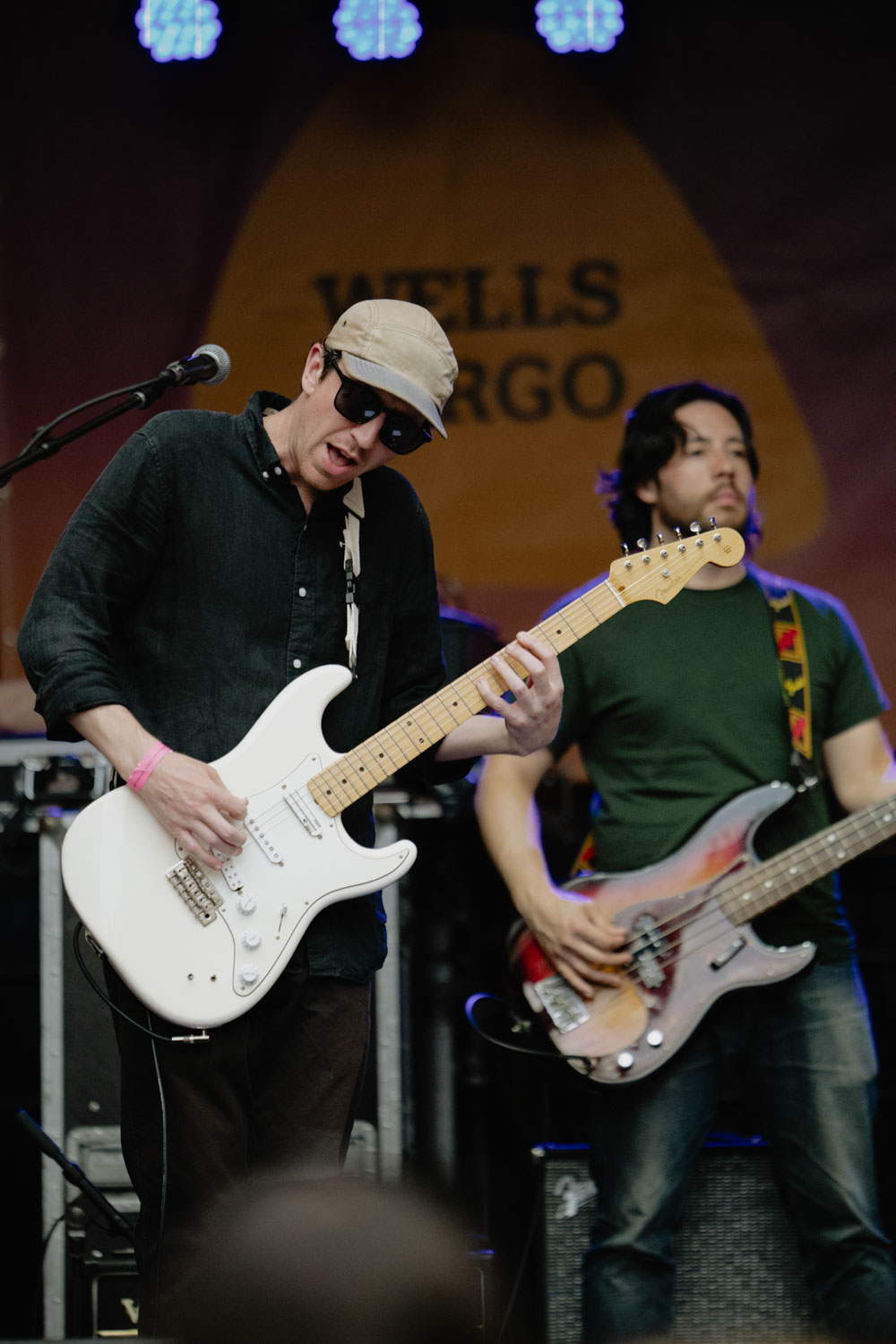
Subterranean, the long-running Wicker Park music venue, again helped curate the 2026 lineup, bringing together artists from Chicago and well beyond it. The weekend included The Frights, Ovlov, Devon Gilfillian, Ryan Davis & The Roadhouse Band, Shannon Shaw Band, Liquid Mike, Austin TV, Moving Mountains, Good Boy Daisy and dozens more.
What made the lineup interesting was not simply its geographic reach. There was a strong sense that these were artists with current identities of their own—bands writing original music, releasing records, developing audiences and, in many cases, actively touring.
That distinction could be felt almost immediately from the stages.
The music did not seem programmed merely to maintain energy along the street. It felt selected.


Saturday Made the Direction Clear
Good Boy Daisy was one of the performances that made that musical direction particularly easy to understand.
The band arrived with the polish and stage presence of an act built for touring, but without losing the immediacy that makes a smaller outdoor stage fun. The group released Blitz earlier this year and continued through an extensive 2026 touring schedule, with dates across the United States following Wicker Park Fest.
Moving Mountains brought a different weight to the afternoon. The New York band’s expansive rock sound felt considerably larger than the physical footprint of the stage, while Austin TV created one of the weekend’s most visually distinctive performances.
The masked Mexican instrumental band looked unlike almost anything else on Milwaukee Avenue. Without relying on a conventional front-person dynamic, the group turned movement, costumes and instrumental performance into part of the visual language of the show.
Then, on the South Stage, Raina Sokolov-Gonzalez offered another shift in tone. Her voice was the element that registered first—distinctive enough to pull attention even within a festival where music was coming from multiple directions.
The styles were different, but that was part of the appeal. Moving between stages felt less like following a single genre and more like moving through a carefully assembled collection of artists.

The Festival Looked Like Wicker Park
That sense of curation continued away from the music.
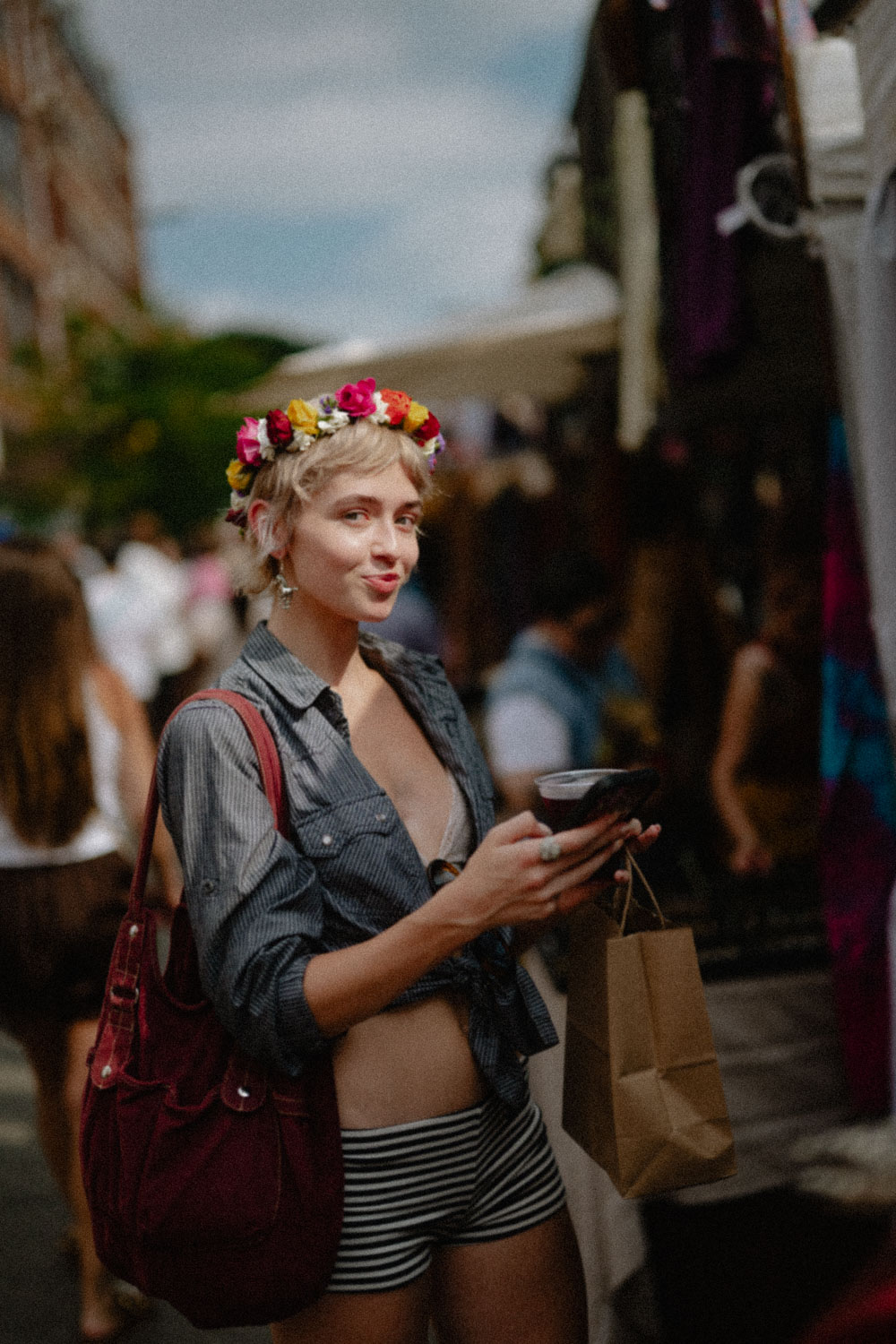
Vendor booths, installations, storefronts and the crowd itself gave the festival a visual character that felt unusually connected to its surroundings. Milwaukee Avenue already carries a mix of independent retail, vintage clothing, restaurants, nightlife and street style, and much of that identity remained visible even after the street was filled with festival infrastructure.
The result felt polished without becoming overly formal.
There was color everywhere, plenty of individual style in the crowd, and enough visual variation among the booths and activities that walking between stages remained part of the experience rather than simply the distance between performances.
Wicker Park Fest did not feel temporarily placed in the neighborhood. Much of it felt like an extension of what was already there.




Thrift Riot Put the Neighborhood on a Runway
One of the clearest examples came Sunday afternoon with the Thrift Riot Fashion Show.
Hosted by Amber McCulloch, with music from DJ Mishaal Jan, the South Stage runway brought together vintage, secondhand, reworked and sustainably sourced looks from businesses including Lost Girl Vintage, Store B Vintage, Round Two Chicago, Style Plus Curves Vintage, Velvet Goldmine, The Pear House, Chicago Estate Advisors and Bodega Vintage.
Wicker Park and Bucktown are home to more than 20 vintage, resale and thrift boutiques, which made the fashion show feel less like an unrelated festival activity and more like another expression of the neighborhood.
And it worked as an actual runway.
The models brought personality to the clothes, the looks changed quickly, and the show had enough momentum that it rewarded the same kind of attention as any dedicated fashion event. Within a weekend centered heavily on music, Thrift Riot also demonstrated that Wicker Park’s creative identity extends well beyond its stages.


A Festival That Rewards Looking Around
There were other layers throughout the weekend as well.
The South Stage incorporated cultural programming, while Kids Fest, Pet Fest, public art and local organizations occupied different parts of the street. The festival’s suggested gate donation also supports its production, Chamber programs and community partners, with Kids Fest activity proceeds benefiting nearby Burr Elementary School.
None of those programs needed to compete with the music.
Instead, they made the space between performances more interesting. Someone could arrive for a specific band and still encounter a fashion show, an installation, a neighborhood shop or something completely unexpected before reaching the next stage.
That kind of discovery suits Wicker Park particularly well.


More Than the Sum of Its Stages
Wicker Park Fest works because its different parts seem to come from the same place.
The original music, touring artists, vintage fashion, neighborhood businesses, public art and people filling Milwaukee Avenue do not feel like unrelated attractions assembled for a weekend. Together, they form a recognizable identity.
The music may provide the strongest reason to plan a visit. Subterranean’s involvement gives the lineup a point of view, and the presence of artists from Chicago and around the country gives the stages a reach that extends well beyond the few blocks occupied by the festival.
But the performances make more sense once everything around them is visible too.
Wicker Park has spent decades building a reputation around music, independent culture and individual style. For one weekend in July, much of that character moved outside and occupied Milwaukee Avenue at the same time.
That may be the simplest way to understand Wicker Park Fest.
It looks like the neighborhood.


